5 Hidden Features of the Nano80 2020 You Must Know About
The LG Nano80 series from 2020 represented a pivotal moment in the evolution of mid-range LED televisions. While the marketplace was increasingly crowded with entry-level 4K sets and high-end OLED powerhouses, the Nano80 carved out a niche for those who demanded superior color accuracy without the premium price tag of organic light-emitting diode technology. Utilizing LG's proprietary NanoCell technology, this television uses tiny particles to filter out dull colors and enhance purity, resulting in a vibrant, lifelike image. However, beyond the marketing headlines of color depth and 4K resolution, there lies a suite of features that many owners and prospective buyers overlook. These functionalities elevate the device from a standard display to a central hub for home automation, specialized gaming, and refined cinematic experiences. In this detailed exploration, we dive into the lesser-known capabilities of the Nano80 2020 that truly define its value proposition in the modern smart home.
The Evolution of the NanoCell Series
To understand the specific strengths of the 2020 Nano80, one must first understand where it sits in the lineage of display technology. Unlike traditional LCDs that rely on a standard color filter, the NanoCell layer consists of nanoparticles approximately one nanometer in size. These particles are engineered to absorb unwanted light wavelengths, specifically those that cause color bleeding between red and green. By narrowing the spectrum of these primary colors, the Nano80 produces a much wider color gamut than its predecessors. In the 2020 model year, LG focused on refining the local dimming algorithms and expanding the smart capabilities of their WebOS platform. This resulted in a television that was not just about the panel, but about the intelligence driving the pixels. When users first set up a Nano80, they often notice the crispness of the interface, but the real power is found deep within the settings menu and the integrated hardware synergies.
Hidden Feature 1: Intelligent Voice Recognition Beyond the Basics
Most users are aware that the Nano80 supports voice commands via the Magic Remote. However, the depth of the ThinQ AI integration goes far beyond asking for the weather or searching for a YouTube video. One of the most powerful hidden features is the "Natural Language Processing" for complex situational commands. Instead of saying "Open Netflix," users can state, "Find me action movies from the 90s that I haven't seen yet." The LG ThinQ AI cross-references metadata from various installed streaming services and your own viewing history to curate a list. Furthermore, the Nano80 2020 acts as a dashboard for the Internet of Things (IoT). Through the Home Dashboard, you can use voice commands to check the status of your smart washing machine, dim compatible lights, or view a feed from a smart doorbell. The "Contextual Awareness" feature allows the TV to understand follow-up questions; if you ask "Who is the lead actor in this movie?" and it responds, you can follow up with "What else has he been in?" without repeating the actor's name.
Hidden Feature 2: Filmmaker Mode and Auto Calibration
The Nano80 was one of the first mid-range sets to lean heavily into the UHD Alliance’s "Filmmaker Mode." While this feature is listed in the picture modes, its automation is what makes it a "hidden" gem. When enabled, the TV can detect specific metadata in a content stream that triggers the mode automatically. This turns off all post-processing effects—such as motion smoothing, noise reduction, and sharpening—while maintaining the original aspect ratio, colors, and frame rates intended by the director. For the cinephile, this is revolutionary because it eliminates the "soap opera effect" that plagued many LED TVs of the era. Additionally, many owners are unaware that the Nano80 supports hardware-level auto-calibration via specialized software. While professional calibration usually requires expensive equipment, the Nano80’s 2020 firmware allows for a more accessible "AI Picture" optimization that analyzes the type of content (sports, movies, or news) and adjusts the luminance and contrast curves of the NanoCell filter in real-time to match the ambient light in your room.
Hidden Feature 3: Game Optimizer and HGiG Integration
While the Nano80 2020 is a 60Hz panel, it punches significantly above its weight class in terms of input lag and gaming-specific features. A hidden advantage for console gamers is the integration of HGiG (HDR Gaming Interest Group) profiles. When playing on a PS5 or Xbox Series X, the Nano80 can communicate with the console to let the game engine handle the tone mapping rather than the TV’s internal processor. This prevents "double tone mapping," which often leads to lost detail in highlights and shadows. This feature is hidden deep in the "Additional Settings" under the Picture menu but is essential for a competitive edge. Furthermore, the "Instant Game Response" mode utilizes Auto Low Latency Mode (ALLM) to switch the TV into its fastest response state the moment a gaming signal is detected. For a mid-range television, achieving sub-15ms input lag in 4K HDR was a significant milestone that many buyers initially overlooked in favor of more expensive 120Hz displays.
Hidden Feature 4: Bluetooth Surround Ready and Sound Sharing
The audio capabilities of thinner LED TVs are often a point of criticism, but the Nano80 2020 includes a "Bluetooth Surround Ready" feature that acts as a sophisticated workaround for those who don't want a full wired home theater. This feature allows you to connect two identical LG Bluetooth speakers to act as rear channels. When activated, the TV's internal speakers handle the front left, right, and center channels, while the Bluetooth speakers handle the surround effects, creating a legitimate 4.0 or 4.2 channel experience without a receiver. Another hidden audio feature is "Sound Share." Using the TV's Bluetooth 5.0 hardware, you can stream audio from your smartphone directly to the TV speakers, or conversely, use the "Private Listening" mode via the LG ThinQ app to send the TV's audio to your phone’s headphones. This is perfect for late-night viewing without disturbing the household, a utility that many users don't realize is built directly into the ecosystem.
Discover deals on TVs & Home Theater — updated daily.
See Deals →Hidden Feature 5: Multi-View and Mobile Content Mirroring
In an era of multi-tasking, the Nano80 2020 includes a "Multi-View" feature that was quite advanced for its time. Users can split the screen to watch a live broadcast on one side while mirroring their smartphone screen on the other. This is particularly useful for sports fans who want to watch a game while keeping an eye on their fantasy football stats or social media feeds. The TV supports both Miracast for Android and AirPlay 2 for Apple devices. The hidden depth here lies in the "Home Dashboard" management, where you can designate specific devices as permanent inputs. For Apple users, the integration is so deep that you can include the Nano80 in HomeKit scenes. For instance, a "Movie Night" scene could automatically dim the lights, close smart blinds, and turn on the Nano80 to a specific input, all controlled from an iPhone or Siri command. This level of system-level integration is often missed by users who only use the standard HDMI inputs.
Detailed Product Analysis
The LG Nano80 (2020) utilizes an In-Plane Switching (IPS) panel, which is its greatest strength and its most notable limitation. The primary benefit of an IPS panel is the wide viewing angle. Unlike VA (Vertical Alignment) panels found in many competing mid-range TVs, the Nano80 maintains color consistency even when viewed from the side. This makes it an ideal choice for wide living rooms or "man caves" where seating is spread out. However, the trade-off is a lower native contrast ratio. To combat this, LG implemented Local Dimming. While the 2020 Nano80 uses edge-lit local dimming rather than a full-array setup, it still manages to provide better black levels than a standard LED TV by dimming specific zones of the backlight.
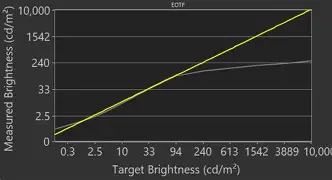
The processing power is provided by the Quad Core Processor 4K. While it lacks the "Alpha" series branding found in the Nano90 or OLED lines, it is highly efficient at upscaling 1080p content to 4K. The upscaling algorithm uses a multi-step process to reduce noise and enhance detail without introducing artifacts. This is particularly noticeable when watching broadcast cable or older DVDs, where the processor must "create" pixels to fill the 4K canvas. The color reproduction, thanks to the NanoCell layer, is where this TV truly shines. It covers nearly 90% of the DCI-P3 color space, which is the standard used in digital cinema. This means that HDR (High Dynamic Range) content looks significantly more vibrant than on a standard SDR display, even if the peak brightness doesn't reach the "blinding" levels of premium QLED or OLED sets.
Pros and Cons of the LG Nano80 2020
- Pro: Wide Viewing Angles. The IPS panel ensures that everyone in the room sees the same vibrant colors, regardless of where they are sitting.
- Pro: Low Input Lag. Excellent for casual and semi-competitive gaming, with features like ALLM and HGiG supporting modern consoles.
- Pro: WebOS Interface. Fast, intuitive, and packed with apps, the 2020 version of WebOS remains a benchmark for smart TV usability.
- Pro: Color Accuracy. The NanoCell technology filters out "impurities" in the light spectrum, leading to exceptionally clean reds and greens.
- Pro: Magic Remote. The point-and-click interface is much faster for typing and navigating menus than traditional directional pads.
- Con: Contrast Ratio. As an edge-lit IPS panel, it struggles in completely dark rooms, where blacks can sometimes appear as dark gray.
- Con: Peak Brightness. While sufficient for most rooms, it may struggle against direct sunlight in very bright, window-heavy environments.
- Con: Lacks 120Hz. Competitive gamers looking for the highest frame rates may feel limited by the 60Hz refresh rate.
Technical Specifications Comparison
To better understand how the Nano80 2020 fares against its contemporaries and successors, the following table outlines the technical specifications that define its performance bracket.
| Feature | LG Nano80 (2020) | LG Nano90 (2020) | Standard 4K LED (Entry) |
|---|---|---|---|
| Panel Type | NanoCell IPS | NanoCell IPS (Full Array) | Standard VA or IPS |
| Refresh Rate | 60Hz | 120Hz | 60Hz |
| Local Dimming | Edge-Lit | Full Array Local Dimming | None (Global Dimming) |
| Processor | Quad Core 4K | alpha 7 Gen 3 AI | Generic Quad Core |
| HDR Support | Active HDR (HDR10, HLG) | Cinema HDR (Dolby Vision) | HDR10 |
| HDMI Version | HDMI 2.0 | HDMI 2.1 | HDMI 2.0 |
Buying Guide: Is the Nano80 2020 Right for You?
When considering a TV from the 2020 lineup in a modern context, buyers typically fall into one of three categories. Understanding where you fit will help determine if the Nano80's specific feature set aligns with your needs. First, there is the Living Room Entertainer. If your primary use case involves watching movies, sports, or TV shows with a group of people, the Nano80 is an excellent choice. The wide viewing angles and natural color reproduction make it a "social" TV. You won't have to worry about guests on the corner of the sofa seeing a washed-out image.
Find top-rated TVs & Home Theater products at great prices.
Browse Now →The second category is the Secondary Room Gamer. While hardcore enthusiasts will want 120Hz and HDMI 2.1 for their main setup, the Nano80 makes for an incredible bedroom or office gaming TV. Its low input lag and smart detection of gaming signals provide a "plug and play" experience that is highly responsive. If you aren't playing twitch-shooters that require 120 FPS, the 60Hz performance here is more than adequate. Finally, we have the Smart Home Integrator. If you are already invested in the LG ecosystem or use Apple HomeKit/Google Assistant, the Nano80 acts as a sophisticated interactive display for your home. Its ability to control other devices and mirror content seamlessly is a major selling point for those who want their technology to "talk" to each other.
Potential buyers should, however, be aware of their room's lighting. Because the Nano80 2020 uses an IPS panel, it is best suited for bright or moderately lit rooms. In a dedicated dark theater room, the limitations of the contrast ratio become more apparent. If you do most of your watching at night with the lights off, you might find the "glow" of the blacks distracting compared to a VA-panel TV or an OLED. However, for the average living room with ambient light, this is rarely an issue, and the color vibrancy often compensates for the lack of "true" blacks.
Advanced Calibration Tips for Nano80 Owners
To get the most out of the hidden features mentioned above, a bit of manual tweaking is recommended. Most users leave their TV in "Standard" or "Vivid" mode, but these modes often introduce aggressive artificial sharpening and blue-tinted whites. To unlock the true potential of the NanoCell filter, it is recommended to start with the "Expert Bright Room" or "Filmmaker Mode" preset. From there, navigate to the "Expert Controls" menu. Reducing the "Sharpness" to 10 or lower will reveal more natural textures in 4K content. Furthermore, adjusting the "Gamma" to 2.2 provides a more cinematic depth to the mid-tones. For gaming, ensure that "HDMI Ultra HD Deep Color" is toggled ON for the port your console is connected to; otherwise, you won't be receiving the full 10-bit color signal that the NanoCell panel is capable of displaying. These small adjustments, combined with the hidden AI features, transform the Nano80 from a good TV into an exceptional one.
Conclusion
The LG Nano80 2020 is a testament to the idea that a television's value is not solely defined by its panel's resolution or price tag. By exploring the hidden depths of its voice recognition, cinematic automation, gaming optimizations, and smart home integration, owners can unlock a level of utility that rivals much more expensive models. While it has its limitations in extreme dark-room scenarios, its performance as an all-rounder is bolstered by the unique NanoCell technology that ensures color purity and wide-angle consistency. Whether you are using it as a central hub for your smart home, a responsive screen for your consoles, or a dedicated window into the director's vision through Filmmaker Mode, the Nano80 2020 remains a sophisticated piece of technology. Understanding these five hidden features allows you to move beyond the surface-level specs and truly master the hardware sitting in your living room, ensuring a viewing experience that remains relevant and impressive years after its initial release.