Head-to-Head: Hisense 116Ux vs Lg Qned92 Mini Led Tv (Detailed Comparison)
The premium television market has undergone a radical transformation over the last few years. While OLED technology once stood alone as the undisputed king of picture quality, the rapid advancement of Mini LED backlighting has created a new category of "super-bright" displays that rival OLED in contrast while far surpassing it in raw luminance. Today, we are looking at two titans of this evolution: the Hisense 116Ux and the LG QNED92 Mini LED TV. These sets represent the absolute pinnacle of their respective brands’ non-OLED engineering, designed for consumers who refuse to compromise on screen real estate or peak brightness.
The Hisense 116Ux is a statement piece, a massive 110-inch engineering marvel that pushes the limits of what is possible with Quantum Dot and Mini LED technology. On the other side, the LG QNED92 brings the sophisticated processing and color science of LG’s QNED line (which combines Quantum Dots and NanoCell technology) into the high-performance Mini LED arena. This comparison dives deep into the technical specifications, real-word performance, and ownership considerations of these two high-end displays to help you decide which belongs in your ultimate home theater setup.
Understanding the Technology: Mini LED and the Push for Contrast
Before comparing these specific models, it is essential to understand the technology they share. Both the Hisense 116Ux and the LG QNED92 utilize Mini LED backlighting. Traditional LED TVs use large light-emitting diodes to illuminate the screen; Mini LEDs are significantly smaller, allowing thousands of them to be packed behind the LCD panel. This density enables "Local Dimming," where the TV can turn off specific sections of the backlight to create deep blacks while keeping adjacent areas bright. The more zones a TV has, the better it can control "blooming" or "haloing"—that annoying glow you sometimes see around bright objects on a dark background.
Hisense 116Ux: The Giant of Mini LED
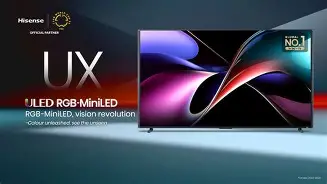
The Hisense 116Ux is part of the "ULED X" series, which Hisense positions as its most advanced display platform. It isn't just a large TV; it is a showcase of extreme specifications. The most striking feature of the 116Ux is its peak brightness and zone count. Utilizing the Hi-View Engine X, the television manages over 40,000 local dimming zones. To put that in perspective, many high-end Mini LED TVs settle for between 500 and 2,000 zones. By having 40,000, the 116Ux achieves a level of precision that gets remarkably close to the pixel-level control of OLED, but with a massive advantage in brightness.
The 116Ux is reported to reach peak brightness levels exceeding 10,000 nits. While that number is far higher than most HDR content is currently mastered for, this "headroom" ensures that specular highlights—like the sun reflecting off water or the glint of a chrome bumper—look incredibly realistic. In a room with many windows or under bright overhead lights, the Hisense 116Ux remains perfectly visible and vibrant, where other TVs might struggle with reflections or washed-out images.
Performance in Real-World Scenarios
For the home cinema enthusiast, the 116Ux offers a size that fills the field of vision in a way a 65 or 75-inch TV simply cannot. At 110 inches, it rivals the experience of a high-end projector but without the requirement of a pitch-black room. The color reproduction is handled by a Quantum Dot layer, providing a wide color gamut that covers nearly the entire DCI-P3 space. This means skin tones look natural, and vibrant landscapes appear intensely saturated without appearing "cartoonish."
LG QNED92: The Refined Precision Specialist
While Hisense focuses on overwhelming specs, the LG QNED92 focuses on the synergy between color science and smart processing. LG’s QNED technology is unique because it uses two layers of color enhancement: Quantum Dots and NanoCell. This dual-filter approach aims to remove light impurities and ensure that red and green colors are as pure as possible. The QNED92 sits at the top of the QNED range, featuring a robust Mini LED backlight system controlled by the Alpha 9 Gen 7 AI Processor.
The Alpha 9 processor is the "brain" of the LG TV, and it is arguably where LG holds its strongest advantage. This chip uses deep-learning algorithms to analyze the content on screen, identifying faces, objects, and backgrounds to apply specific sharpening and noise reduction. For viewers who watch a lot of "legacy" content—such as 1080p cable broadcasts or older DVDs—LG’s AI Upscaling is among the best in the industry, making lower-resolution signals look remarkably crisp on a 4K panel.
The WebOS Advantage
Beyond the glass, the user experience of the LG QNED92 is defined by WebOS. LG has refined its smart TV interface over more than a decade, and it remains one of the most fluid and intuitive systems available. The "Magic Remote," which allows you to point at the screen like a mouse cursor, makes navigating menus and typing in search bars much faster than traditional directional pads. For families who juggle multiple streaming apps and external devices, the organizational layout of WebOS is a significant lifestyle benefit.
Head-to-Head Comparison: Key Metrics
Choosing between these two depends largely on your priorities: do you want the largest, brightest screen possible, or do you want a polished, highly-processed experience with industry-leading smart features? Below is a breakdown of how they compare across critical categories.
Find top-rated TVs & Home Theater products at great prices.
View Offers →Brightness and Contrast
The Hisense 116Ux wins on raw power. Its 40,000 dimming zones and 10,000-nit peak brightness capability are designed for HDR impact. In high-action HDR movies, the 116Ux provides a visceral sense of light. However, the LG QNED92 is no slouch. While its zone count is lower, LG’s "Precision Dimming" algorithms are incredibly sophisticated. LG excels at maintaining shadow detail—ensuring that in a dark scene, you can still see the texture of a character's black jacket rather than it just becoming a "black blob."
Gaming Capabilities
Both manufacturers have embraced the gaming community. The LG QNED92 features four HDMI 2.1 ports, allowing for 4K gaming at 120Hz (and even 144Hz in some modes), Variable Refresh Rate (VRR), and Auto Low Latency Mode (ALLM). It also supports AMD FreeSync Premium and G-Sync compatibility. The Hisense 116Ux also offers 144Hz VRR support and a dedicated Game Mode Pro interface. However, LG’s "Game Optimizer" menu is slightly more evolved, giving gamers instant access to toggle things like "Black Stabilizer" or input lag settings without leaving the game.
Design and Build
The Hisense 116Ux is a massive piece of hardware. It requires a significant amount of space and a very sturdy stand or a professional-grade wall mount. It features an integrated 4.2.2 channel sound system that actually provides a decent soundstage, which is rare for flat-panel TVs. The LG QNED92 features a more traditional, slim-bezel design that fits into more standard living room environments. It looks sleek and premium, with a build quality that feels slightly more "polished" in terms of plastics and assembly tolerances compared to the massive scale of the Hisense.
Pros and Cons
Hisense 116Ux
- Pro: Unrivaled screen size at 110 inches provides a true "cinema at home" experience.
- Pro: Extreme peak brightness (up to 10,000 nits) makes it the best choice for very bright rooms.
- Pro: 40,000+ local dimming zones offer near-OLED black levels and minimal blooming.
- Pro: Robust built-in audio system with dedicated subwoofers.
- Con: Massive physical footprint and heavy weight make installation difficult.
- Con: Smart TV interface (Google TV or Vidaa depending on region) is good but less "snappy" than LG’s WebOS.
- Con: High power consumption due to the massive backlight array.
LG QNED92
- Pro: Alpha 9 AI Processor provides industry-leading upscaling and motion handling.
- Pro: QNED technology (Quantum Dot + NanoCell) delivers incredibly accurate and pure colors.
- Pro: WebOS interface and Magic Remote offer a superior user experience.
- Pro: Extensive gaming features with G-Sync and FreeSync support.
- Con: Lower peak brightness compared to the extreme levels of the Hisense Ux series.
- Con: Fewer local dimming zones leads to slightly more blooming in challenging dark scenes.
- Con: IPS-type panels often used in QNEDs have great viewing angles but lower native contrast than VA panels.
Detailed Specifications Table
| Feature | Hisense 116Ux | LG QNED92 |
|---|---|---|
| Display Type | Mini LED (ULED X) | Mini LED (QNED) |
| Screen Size | 110 Inches | 65, 75, 86 Inches |
| Local Dimming Zones | 40,000+ | Approx. 1,000 - 2,500 (Size dependent) |
| Peak Brightness | Up to 10,000 Nits | Approx. 2,000 - 2,500 Nits |
| Processor | Hi-View Engine X | Alpha 9 Gen 7 AI Processor |
| Smart Platform | Google TV / Vidaa | webOS 24 |
| HDR Formats | Dolby Vision IQ, HDR10+, HLG | Dolby Vision, HDR10, HLG |
| Gaming | 144Hz VRR, ALLM, FreeSync | 120Hz/144Hz VRR, G-Sync, FreeSync |
Buying Guide: Which One is Right for You?
Deciding between these two premium displays involves assessing your room environment, your primary content types, and your tolerance for technical complexity. Here are several scenarios to help guide your purchase.
The "Bright Room" Owner
If your TV sits opposite a wall of floor-to-ceiling windows, the Hisense 116Ux is your winner. Its ability to push thousands of nits of brightness means it can overpower almost any amount of ambient light. While the LG QNED92 is bright by normal standards, it cannot match the raw luminance of the Hisense. The Hisense also uses advanced anti-glare coatings that specifically target the massive surface area of the screen to keep reflections at bay.
The "Cinephile" and Upscaling Enthusiast
If you primarily watch high-quality 4K Blu-rays, standard cable TV, and older movies, the LG QNED92 is likely the better choice. LG’s motion processing is generally more natural; it avoids the "soap opera effect" more effectively than Hisense’s default settings. Furthermore, LG’s Alpha 9 processor handles low-bitrate streaming content (like you might find on older Netflix titles or YouTube) with more grace, smoothing out macro-blocking and digital noise that can become very apparent on a massive screen.
The "Ultimate Gamer"
Both TVs are excellent for gaming, but they serve different niches. If you want the most "immersive" gaming experience possible, playing a racing simulator or an open-world RPG on the 110-inch Hisense 116Ux is life-changing. However, for competitive shooters or players who need the most "locked-in" feel, the LG QNED92 has a slight edge in input lag and software integration. The G-Sync compatibility is also a major plus for PC gamers using NVIDIA cards.
Installation and Practicality
Practicality is the one area where the Hisense 116Ux falls behind. You cannot simply walk this TV into a house; you need to measure doorways, hallways, and elevators. It often requires professional "white glove" installation and a reinforced wall or furniture. The LG QNED92, even in its largest 86-inch variant, is much more manageable for a two-person DIY setup or standard mounting solutions. If you live in an apartment or a house with tight corners, the Hisense might be physically impossible to install.
Color Accuracy and Viewing Angles
One technical detail buyers should care about is the panel type. LG typically utilizes IPS (In-Plane Switching) panels for their QNED line. IPS panels are famous for having wide viewing angles—meaning the colors don't shift or wash out when you sit off to the side. This makes the QNED92 a fantastic choice for large sectional sofas or family rooms where people are viewing from many different angles.
Shop the latest TVs & Home Theater picks on Amazon.
Shop Amazon →The Hisense 116Ux typically uses a VA (Vertical Alignment) panel architecture, which is inherently better at native contrast (producing deeper blacks without the help of the backlight). Traditionally, VA panels had poor viewing angles, but Hisense has employed "Wide Viewing Angle" film technology to mitigate this. On a screen this large (110 inches), viewing angles are actually more important than on a smaller set, because even when sitting centered, the edges of the screen are at a significant angle to your eyes. Hisense has engineered the 116Ux to handle this well, but it is a factor to keep in mind.
Sound Quality: Do You Need a Soundbar?
For the LG QNED92, the answer is generally "yes." While LG’s AI Sound Pro does a decent job of virtualizing a 9.1.2 surround sound experience, the physical speakers are thin and lack deep bass. To match the premium picture, you should ideally pair it with an LG soundbar that supports "WOW Orchestra," allowing the TV speakers and soundbar to work in harmony.
The Hisense 116Ux is one of the few TVs where a soundbar might actually be a downgrade from the built-in system. Because the chassis is so large, Hisense was able to fit legitimate speakers with actual air-moving capacity. It includes side-firing and up-firing drivers, creating a hardware-based Dolby Atmos experience that is surprisingly robust. While it won't beat a dedicated 7.1.4 home theater system with a standalone receiver, it is more than sufficient for most users.
Conclusion: The Verdict on Mini LED Excellence
The choice between the Hisense 116Ux and the LG QNED92 boils down to a choice between "Maximum Impact" and "Refined Versatility."
The Hisense 116Ux is a specialized instrument. It is designed for the buyer who wants the biggest and brightest screen currently available on the consumer market. Its 40,000 dimming zones and 110-inch frame make it a generational leap in LED technology. If you have the space, the budget, and a room that needs to fight off intense sunlight, it is the most impressive Mini LED TV ever built. It turns every viewing session into an event.
The LG QNED92, conversely, is the better "all-rounder" for most luxury homes. It offers a more polished software experience, superior AI-driven image processing, and a color system (Quantum Dot + NanoCell) that produces some of the most accurate colors available in the non-OLED world. It is easier to install, better for low-resolution content, and provides a slightly more refined set of gaming tools for the enthusiast. While it lacks the sheer "wow factor" of the Hisense's 110-inch scale, it provides a consistent, high-quality experience that is hard to fault.
Regardless of which model you choose, both the 116Ux and the QNED92 prove that Mini LED is no longer just a budget alternative to OLED. These are world-class displays that offer a unique combination of brightness, color, and contrast that was once thought impossible for LCD technology. For those who want the cinema experience without the drawbacks of a projector, these two sets represent the gold standard of modern television engineering.